Magdalene Bridge: Cambridge's historic Great Bridge
The cast-iron bridge beside Quayside stands at the oldest river crossing in Cambridge, with a documented history that reaches back to at least 875.
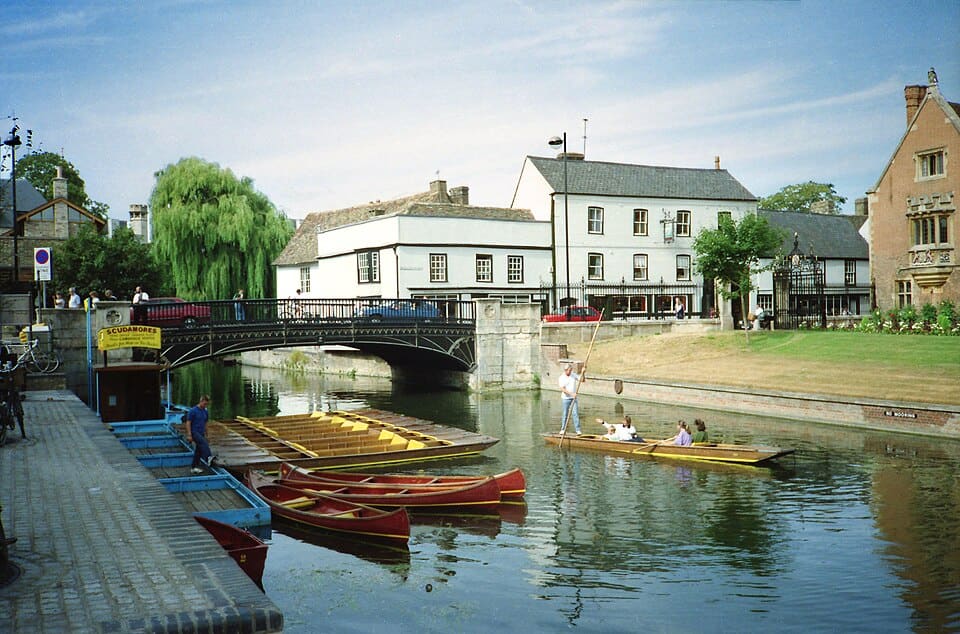
The bridge at Quayside
Magdalene Bridge carries Magdalene Street across the River Cam beside Quayside. Historic England records it as the Great Bridge, also known as Magdalene Bridge: a single cast-iron span with iron railings ending at ashlar piers, built in 1823 and listed at Grade II.
Why the crossing mattered
The crossing sits at the strategic point where land routes approached the Cam below the settlement on Castle Hill. Cambridge City Council's historic core appraisal identifies the meeting of the river crossing, the navigable waterway and the surrounding routes as a major factor in the city's early growth.
The Roman period, and what the evidence shows
The crossing occupies the strategic point where Roman routes approached the Cam below the settlement on Castle Hill. A river crossing existed in this area during the Roman period, but the surviving documentary history of the Great Bridge begins in the Anglo-Saxon period. No Roman bridge has been proven at the exact modern location.
The bridge by 875
Cambridge's English name developed from the Anglo-Saxon name for the settlement at the bridge over the Granta, the river later called the Cam. The Victoria County History identifies the Great Bridge as existing by 875 at the latest.
The medieval Great Bridge
Medieval records show recurring maintenance problems. An inquest in 1275 concerned money collected for rebuilding, and by 1279 the bridge was reported to be in such poor repair that carts fell into the river.
James Essex's stone bridge, 1754
The last wooden bridge was replaced in 1754 by a stone bridge designed by James Essex. It cost £1,609, funded through pontage (a toll for bridge upkeep) and subscriptions.
The iron bridge of 1823
The present cast-iron bridge replaced the stone one. A contemporary newspaper report indicates that it was completed on 13 December 1823. The design is attributed to the Norwich architect Arthur Browne, with Benjamin Bevan involved in overseeing design and construction. The major ribs were cast in Derbyshire, and other ironwork came from a Cambridge foundry.
What to notice today
Look for the single iron span, the railings finishing at stone piers, and the view along the water to the punting stations at Quayside. The bridge also marks the northern end of the classic College Backs route; see the punting guide for what a trip covers.
To go further, read the history of Quayside, visit Magdalene College beside the bridge, or climb Castle Mound, the high ground the crossing was tied to. Practical directions are in the visitor guide.
Sources: Historic England, list entry 1331826, Magdalene Bridge, the Great Bridge; Victoria County History of Cambridgeshire, The city of Cambridge: Bridges; Cambridge City Council, Historic Core Appraisal, The Historical Development of Cambridge. Checked October 2026.
Frequently asked
Great Bridge is the older name for the main river crossing in Cambridge. Magdalene Bridge takes its modern name from Magdalene College, which stands beside it.
No. The present bridge dates from 1823. A river crossing existed in this area in Roman times, but the written history of the Great Bridge itself begins in the Anglo-Saxon period.
The cast-iron bridge was completed in 1823. It replaced a stone bridge of 1754, which in turn replaced the last wooden bridge.
See the bridge from the water
A punt trip from Quayside starts right beside it.